
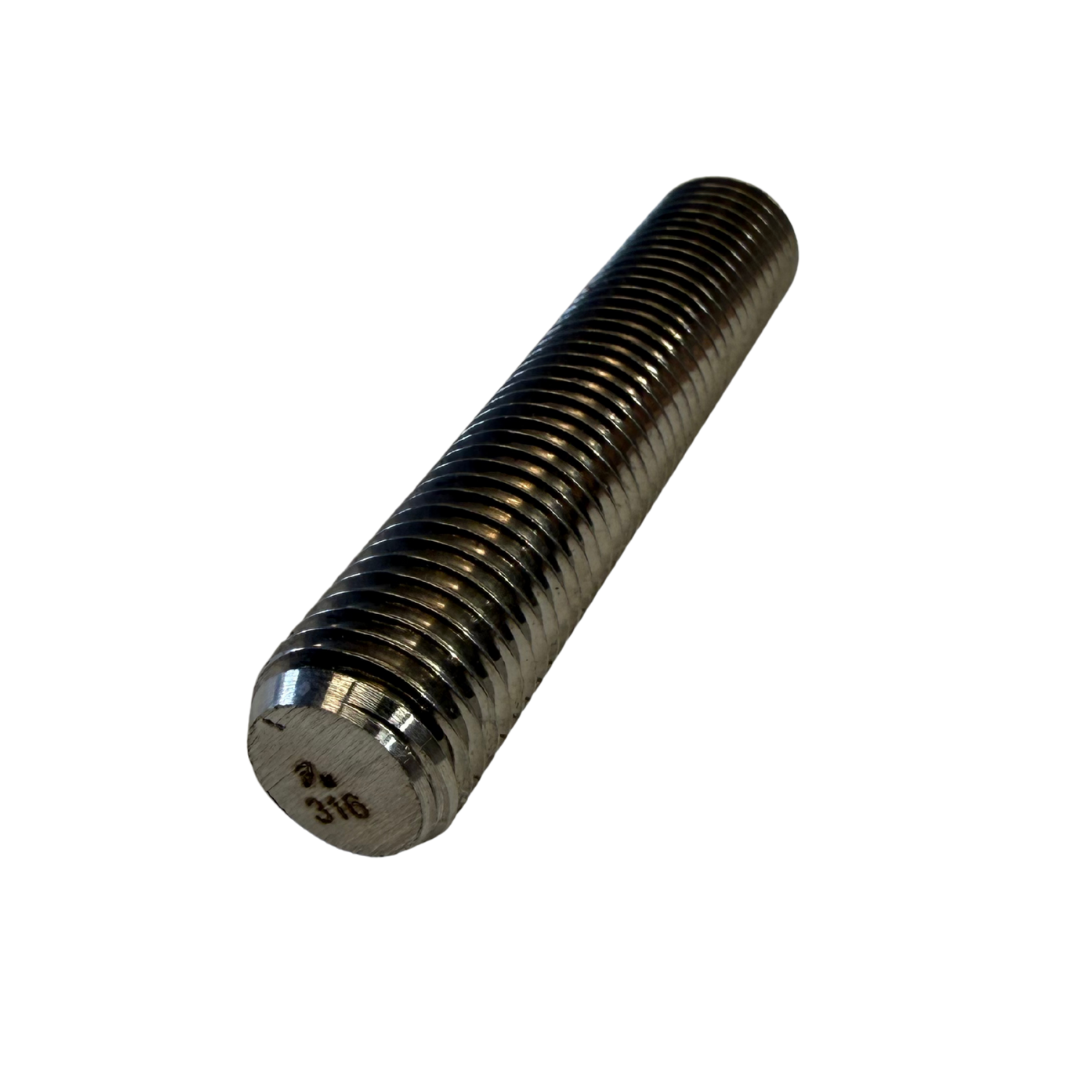
ASTM A193 B8M Stud Bolts (Class 1 & 2)
ASTM A193 B8M is a specification covering alloy and stainless steel bolting materials intended for high-pressure or high-temperature service. B8M refers specifically to 316 stainless steel, offering enhanced resistance to chlorides and aggressive chemicals compared to standard 304 stainless (B8).
Class 1
- Similar to B8 except with added Molybdenum.
- Has better corrosion resistance than B8 in most environments.
Class 2
- Same as B8M Class 1 except strain-hardened.
- This is a cold-working process which increases physical properties.
- 100 to 125,000 PSI tensile
Key Features:
- Corrosion-resistant stainless steel construction (316 stainless steel)
- Superior resistance to chlorides, chemicals, and harsh environments
- Designed for high-temperature and highly corrosive service conditions
- Full-length threading for maximum engagement and load distribution
- Excellent durability in marine and offshore applications
- Strong tensile performance with enhanced corrosion resistance
- Non-magnetic in annealed condition
- Ideal for aggressive chemical and saltwater environments
- Compatible with ASTM A194 Grade 8M heavy hex nuts
Applications of ASTM A193 B8M Stud Bolts
Manufactured from 316 stainless steel, B8M offers enhanced resistance to chlorides, saltwater, and aggressive chemicals.
Common applications include:
- Marine and offshore environments
- Chemical processing plants
- Oil & gas and petrochemical facilities
- Seawater and desalination systems
- Heat exchangers and pressure vessels
- Industrial piping systems exposed to corrosive media
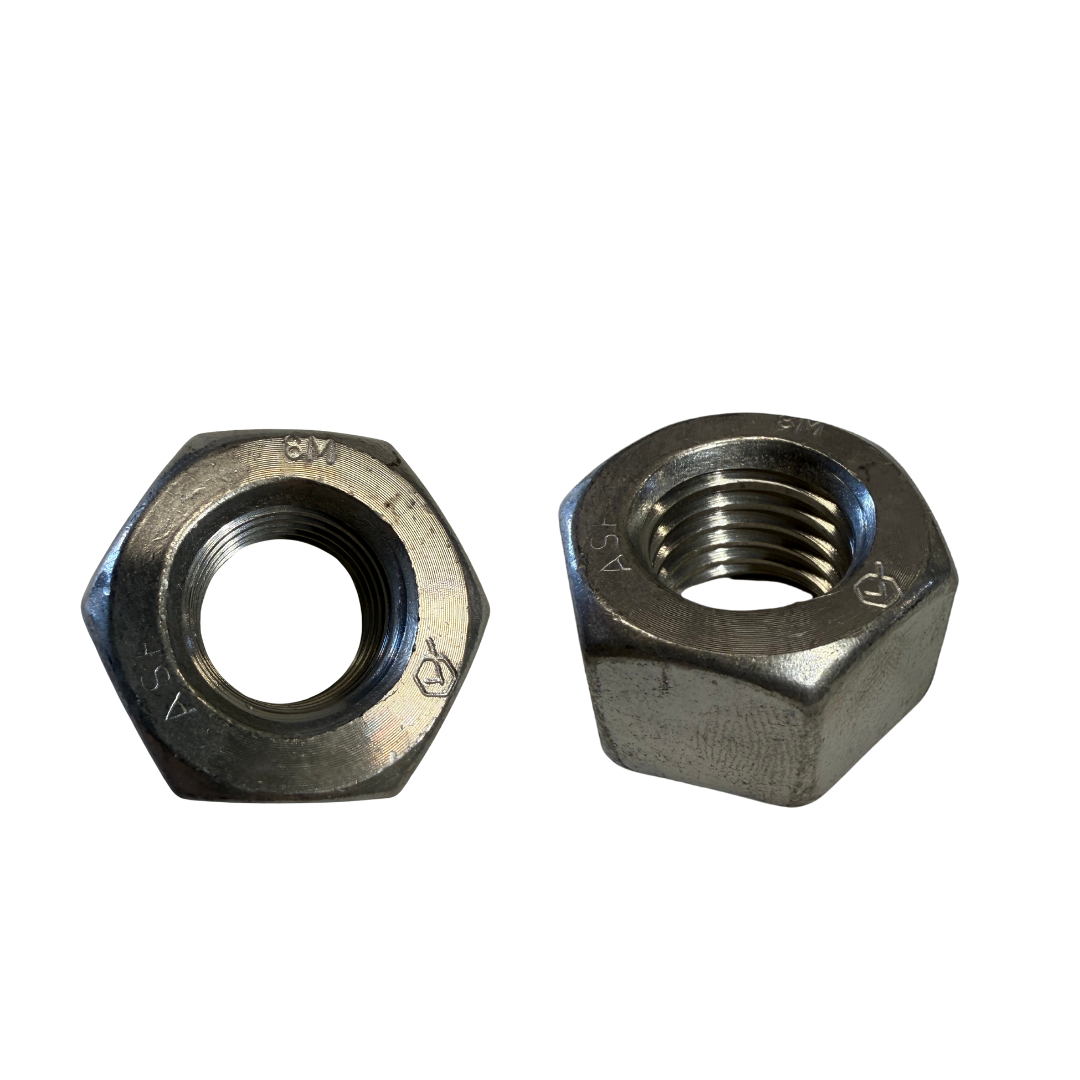
Commonly Paired With 8M Heavy Hex Nut
ASTM A193 B8M stud bolts are typically paired with ASTM A194 Grade 8M heavy hex nuts to create a fully corrosion-resistant fastening system. This combination ensures compatibility in both mechanical performance and material composition, reducing the risk of galvanic corrosion and ensuring long-term reliability.
Grade 8M nuts are manufactured from 316 stainless steel to match the corrosion resistance of B8M stud bolts, making them ideal for demanding environments where exposure to moisture, saltwater, or chemicals is a concern.
| Grade | Material | Tensile Strength Min ksi |
Yield Strength, 0.2% offset Min ksi |
Elongation in 4D Min % |
Reduction of Area Min % |
Hardness Max |
|---|---|---|---|---|---|---|
| B8M | 316 Stainless Steel | 75 | 30 | 30 | 50 | 223 HBW or 96 HRB (2) |
| Grade | Material | Tensile Strength Min ksi |
Yield Strength, 0.2% offset Min ksi |
Elongation in 4D Min % |
Reduction of Area Min % |
Hardness Max |
|---|---|---|---|---|---|---|
| B8M Class 2 | 316 Stainless Steel (Strain Hardened) | 125 | 100 | 12 | 35 | 321 HBW |
Per ASTM A193/A193M-16
| Grade | Material | Carbon % by weight |
Manganese % by weight |
Phosphorus % by weight |
Sulfur % by weight |
Silicon % by weight |
Chromium % by weight |
Nickel % by weight |
Molybdenum % by weight |
|---|---|---|---|---|---|---|---|---|---|
| B8M | 316 Stainless Steel | 0.08 max | 2.00 max | 0.045 max | 0.030 max | 1.00 max | 16.0–18.0 | 10.0–14.0 | 2.00–3.00 |
| Standard | Description |
|---|---|
| ASTM A193 (1) | Covers alloy and stainless steel bolting materials and bolting components for pressure vessels, valves, flanges, and fittings for high temperature or high pressure service, or other special purpose applications. |
| ASME B18.31.3 | Covers the general and dimensional data for inch series threaded rods. |
| ASME B1.1 UNC & UNF Class 2A | Specifies the thread form, series, class, allowance, tolerance, and designation for unified screw threads. |
Coating & Finish Options
ASTM A193 B8M stud bolts are manufactured from 316 stainless steel, which provides excellent inherent corrosion resistance. In most applications, additional coatings are not required. However, specialized coatings may be used to enhance performance in extreme environments or improve installation.
Plain (316 Stainless Steel) Finish
B8M stud bolts are most commonly supplied in a plain finish, utilizing the natural corrosion resistance of 316 stainless steel. This makes them ideal for marine, chemical, and high-moisture applications.
PTFE Coated
PTFE-coated B8M stud bolts provide enhanced corrosion protection and reduced friction during installation. This helps prevent galling and allows for smoother assembly, making them especially useful in highly corrosive or high-moisture environments.
B8 vs B8M Stud Bolts – What’s the Difference?
ASTM A193 B8 and B8M stud bolts are both stainless steel fasteners designed for high-temperature and corrosive environments, but they differ in material composition and corrosion resistance. Choosing between them depends on the severity of the environment and exposure conditions.
| Feature | B8 Stud Bolts | B8M Stud Bolts |
|---|---|---|
| Material | 304 Stainless Steel | 316 Stainless Steel |
| Corrosion Resistance | Good | Superior |
| Chloride Resistance | Moderate | Excellent |
| Marine Use | Limited | Ideal |
| Cost | Lower | Higher |
Material Composition
- B8 Stud Bolts are manufactured from 304 stainless steel, offering good corrosion resistance for general industrial and atmospheric environments.
- B8M Stud Bolts are made from 316 stainless steel, which includes molybdenum for enhanced resistance to chlorides, saltwater, and aggressive chemicals.
Corrosion Resistance
- B8 (304 stainless) performs well in most environments but may be susceptible to corrosion in chloride-heavy or marine conditions.
- B8M (316 stainless) provides superior corrosion resistance, especially in saltwater, coastal, and chemical processing environments.
Typical Applications
- B8 Stud Bolts:
- General industrial use
- Chemical processing (moderate exposure)
- Food and sanitary applications
- Indoor or controlled environments
- B8M Stud Bolts:
- Marine and offshore applications
- Chemical and corrosive processing plants
- Seawater and desalination systems
- High-moisture or chloride-rich environments
Cost Consideration
- B8 stud bolts are typically more cost-effective and suitable for standard corrosion-resistant applications.
- B8M stud bolts are more expensive but provide longer service life in harsh environments, reducing maintenance and replacement costs over time.
FAQS